RELIGIOUS
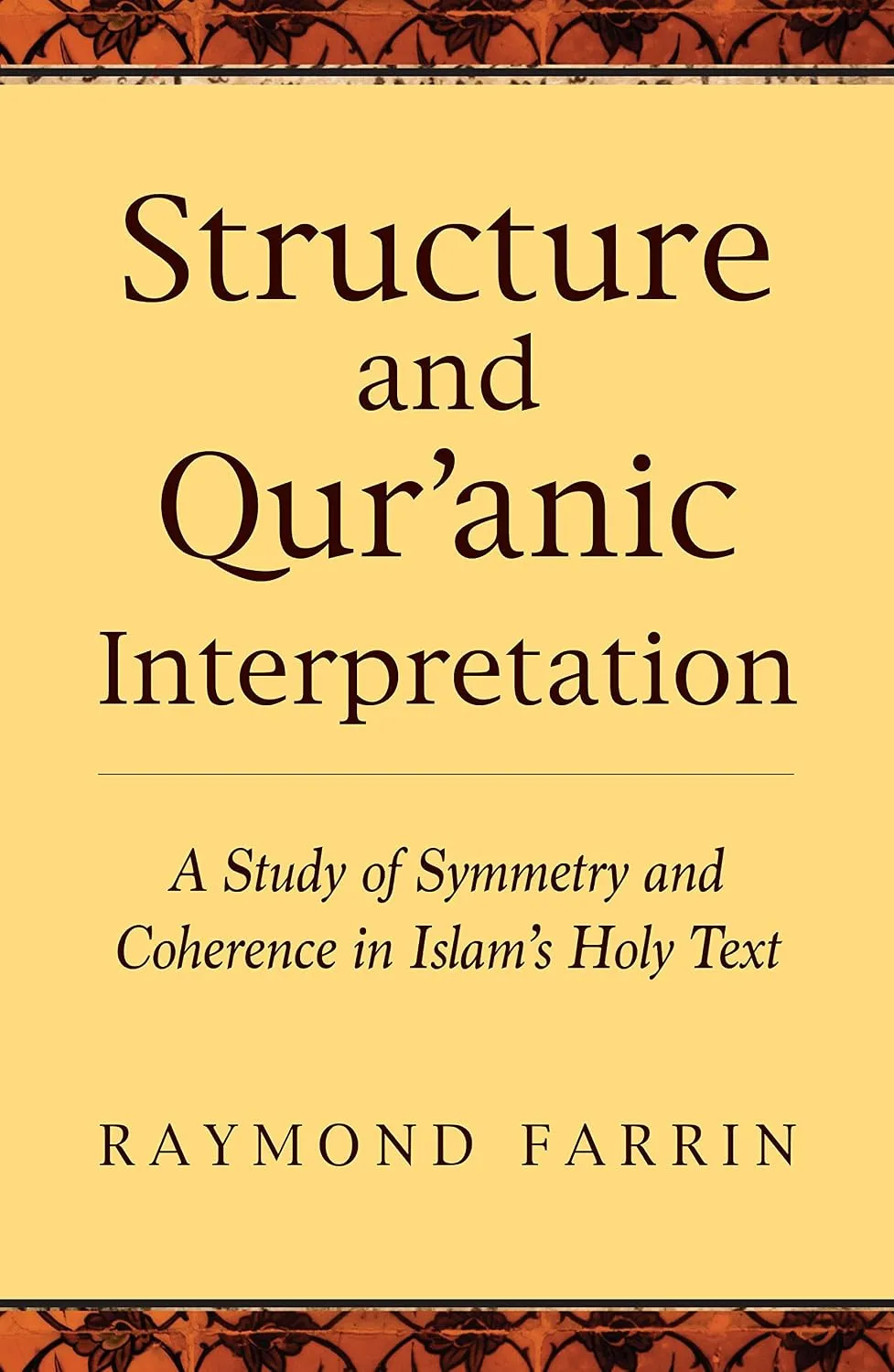
The Qur'an, Islam's holy book, is widely misunderstood because it is a difficult book to engage. The Qur'an is not written as a straightforward narrative like the Christian Gospels but is composed of discontinuous revelations that are often unclear in placing in an overall context. Structure and Qur&;anic Interpretation, aimed both at readers familiar with the Qur&;an and at those opening it for the first time, differs from other books on the Qur&;an in that it reveals the text&;s fundamental symmetrical organization. Moreover, through readings of key Qur'an chapters, Farrin shows how structure serves as a guide to interpretation. Indeed, one finds that the Qur&;an&;s structure again and again points to universal messages of an ethical nature, rather than to messages whose application may be limited to a specific context. In addition, the book makes a contribution to Qur&;anic studies by highlighting literary evidence indicating that the Qur&;an was compiled by one author (in all probability, the Prophet Muhammad) and not by an official committee.